By Zavia Pakistan Sports Desk
Published: February 6, 2026
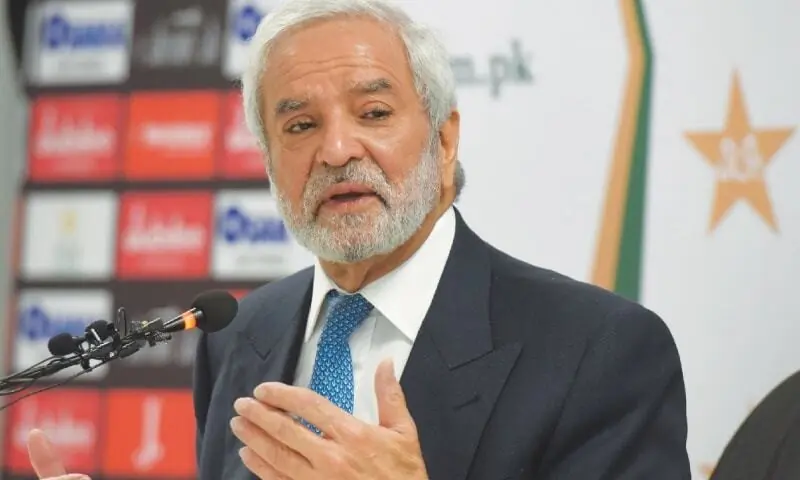
Former International Cricket Council (ICC) president and ex-chairman of the Pakistan Cricket Board (PCB), Ihsan Mani, has called on current ICC chief Jay Shah to intervene and help ease tensions following Pakistan’s decision to boycott its match against India, scheduled to take place in Colombo on February 15.
Speaking from London, Mani stressed that as the head of world cricket’s governing body, Jay Shah must take a leadership role in resolving the situation to protect the future of international cricket and prevent major financial losses.
Call for Direct ICC Intervention
Mani stated that Jay Shah should personally engage with Pakistan’s authorities and PCB leadership, including Mohsin Naqvi, to defuse the crisis.
“He should visit Pakistan, engage with the government, listen to their concerns, and work towards ending the boycott,” Mani said.
He emphasized that the responsibility lies with the ICC leadership to protect the integrity and stability of global cricket.
Objections to Deputy Chairman’s Role
Responding to reports that ICC Deputy Chairman Imran Khawaja had been tasked with negotiations, Mani dismissed the move, saying Khawaja was not the appropriate figure to handle such a sensitive matter.
“It is more appropriate for the ICC chairman himself to engage directly with the Government of Pakistan,” he said, adding that leadership-level dialogue is essential in such high-stakes disputes.
Legal and Arbitration Possibilities
Mani suggested that Pakistan’s decision indicates the presence of serious underlying concerns and could lead to legal proceedings if the matter is taken to the ICC Arbitration Committee.
He acknowledged that Pakistan’s case may face challenges, particularly because Pakistan’s matches were shifted from India to Sri Lanka under the hybrid model, but maintained that a strong legal team could still present an effective argument.
Potential Global Legal Escalation
According to Mani, India’s strong influence within the ICC could again affect arbitration outcomes, similar to past disputes.
He stated that if Pakistan does not receive justice through ICC mechanisms, the country has the right to take the matter to the World Court of Arbitration in Switzerland, where, he believes, Pakistan would have a strong case due to documented political interference in cricket governance.
Financial Impact of Match Boycott
Highlighting the economic consequences, Mani noted that the India-Pakistan match generates massive revenue for the ICC, while Pakistan receives only 5.75% of the revenue share, compared to India’s 38.5%.
Despite the financial implications, he emphasized that Pakistan must stand firm against political influence in international cricket governance.
Criticism of ICC and BCCI Conduct
Mani also criticized the ICC’s handling of previous incidents, including alleged diplomatic and political gestures during international tournaments, stating that inaction by global cricket authorities had contributed to the current crisis.
He argued that Pakistan’s decision, although possibly conflicting with ICC participation agreements, was forced by persistent negative conduct and lack of institutional accountability.
Rising Tensions in World Cricket
The boycott of the high-profile India-Pakistan match has intensified concerns over the growing politicization of international cricket and its impact on global tournaments, broadcasting revenues, and fan engagement.
Zavia Pakistan will continue to provide verified, in-depth coverage of developments surrounding international cricket governance, ICC decisions, and Pakistan’s position on global sports diplomacy.
